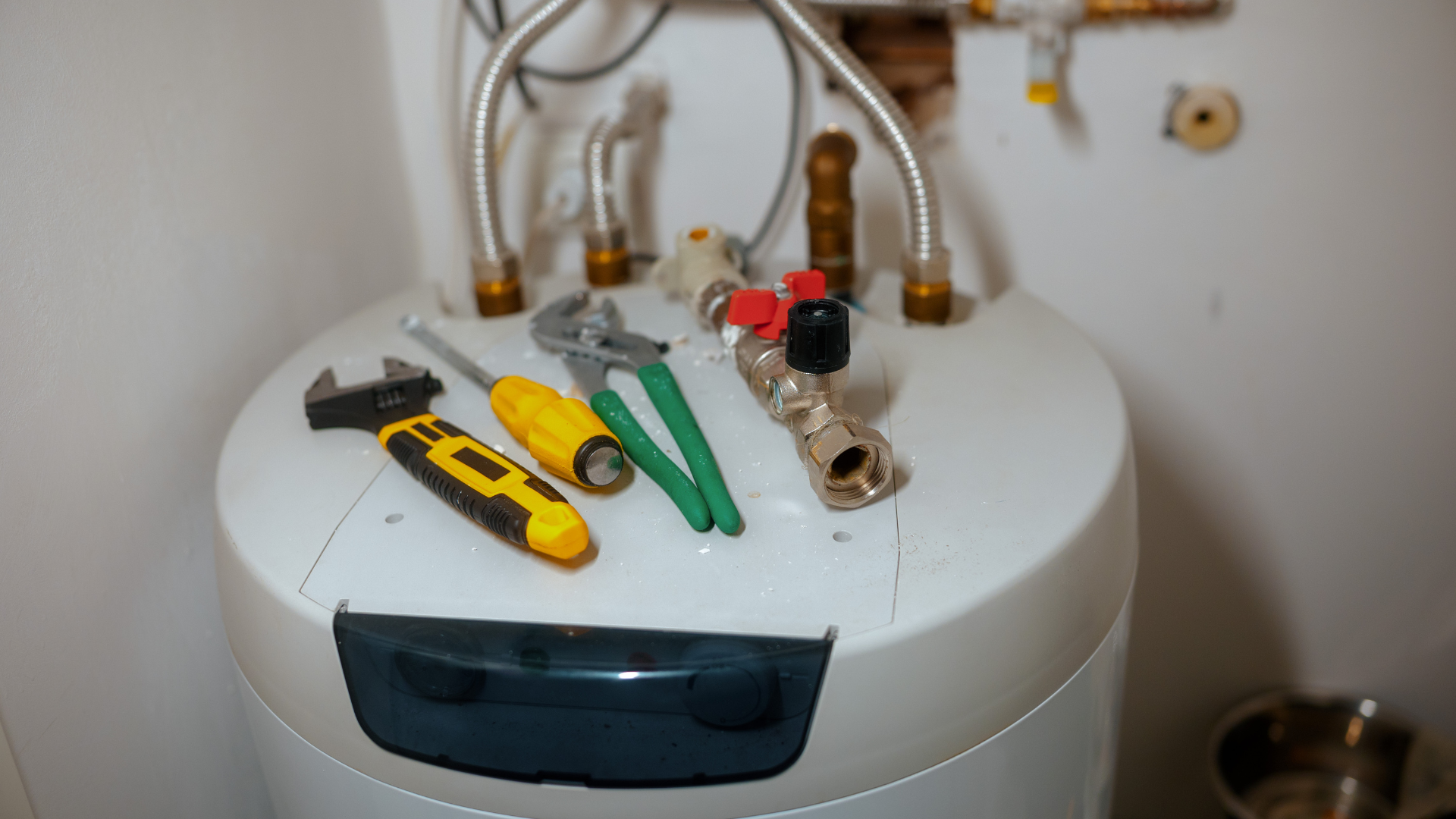
Is Your Water Heater Ready for Spring? Signs It's Time to Service or Replace
After a long Mogollon Rim winter, your water heater has been working overtime — and spring is the perfect time to find out if it held up. In Payson and surrounding Rim Country, water heaters face challenges that flatland Arizona homes simply don't deal with: hard well water, high-elevation effects on gas combustion, and freezing temperatures that stress pipes and tanks from November through March. Doug Hall's Plumbing has helped Payson homeowners keep their plumbing running through every season. This guide will show you exactly what to look for this spring — and how to decide whether your unit needs a service call or a full replacement.
What Winter Does to Your Water Heater in the Payson Area
Payson winters are harder on water heaters than most homeowners realize. Here's what's been happening inside your unit since November:
| Winter Stressor | First Name |
|---|---|
| Cold Incoming Ground Water | Forces the unit to work harder and longer to reach temperature, increasing energy consumption and wear |
| Accelerated Sediment Buildup | Hard water minerals solidify faster in cold temperatures — a heavily scaled tank can increase energy costs by up to 29% and significantly shorten unit lifespan |
| Freeze Stress | Even without a full pipe burst, repeated freeze-thaw cycles stress tank connections, supply lines, and valves over time |
| Faster Hot Water Depletion | Colder ambient temperatures mean the unit recovers more slowly between uses — that "running out of hot water" feeling is your heater struggling to keep up |
Warning Signs Your Water Heater Needs Service
If you're noticing any of these after this past winter, it's time to call Doug Hall's Plumbing for a spring inspection:
| Warning Sign | What to Watch For |
|---|---|
| Longer Heating Times | Takes noticeably longer than usual to deliver hot water |
| Inconsistent Temperatures | Water fluctuates between hot and lukewarm without explanation |
| Unusual Noises | Popping, cracking, or rumbling during heating cycles — a sign of sediment buildup |
| Visible Corrosion | Rust or oxidation on the tank exterior, fittings, or base |
| Discolored Water | Rusty or cloudy hot water indicates internal tank corrosion |
| Leaks or Moisture | Any pooling or dampness around the base of the unit |
| Rising Energy Bills | An inefficient unit works harder and longer — your utility bill shows it |
Warning Signs It May Be Time to Replace
Some issues go beyond a service call. Before deciding, know where your unit stands in its lifespan:
- Traditional tank water heaters typically last 8 to 12 years, with some reaching 15 years with proper maintenance
- Tankless water heaters can last 15 to 20 years, making them the longer-term investment despite higher upfront cost
In Rim Country, cold temperatures and hard well water accelerate wear on both types. Annual tank flushing and routine maintenance are essential to avoid premature failure at elevation.
If your unit is showing these signs, replacement is likely the smarter call:
| Warning Sign | What It Means |
|---|---|
| Rust or discolored water | Inner tank is corroding — a sign replacement is likely needed |
| Loud cracking or rumbling | Significant sediment buildup stressing the heating elements |
| Age over 10 years | Approaching or past typical lifespan for a tank-style unit |
| Inconsistent heating | Taking longer to heat or unable to maintain temperature |
The High-Elevation Factor: Why Payson Homes Are Different
Sitting at roughly 5,000 feet above sea level in the Tonto National Forest, Payson is unlike any other Arizona plumbing environment. Lower air density, intense hard water, and dramatic seasonal swings create maintenance demands that standard plumbing advice simply doesn't account for.
Elevation & Gas Water Heaters
At high altitude, thinner air means less oxygen available for combustion. Gas water heaters in Payson and Rim Country homes may struggle to achieve complete combustion — reducing efficiency, increasing fuel consumption, and in some cases producing incomplete burns that affect performance and safety. If your gas unit seems to be working harder than it should, elevation may be a contributing factor worth discussing with your plumber.
Well Water & Mineral Buildup
Rim Country well water carries higher concentrations of calcium and magnesium than municipal water sources. This accelerates limescale accumulation inside tanks and pipes, restricting water flow and shortening the lifespan of both your water heater and your plumbing system. Homes on well water should consider:
- Sediment filters — spin-down or cartridge filters to catch minerals before they reach your water heater
- Water softening systems — reduces mineral load on all appliances and plumbing
- More frequent tank flushing — annually at minimum, every 6 months for heavy mineral areas
Cabin & Seasonal Property Owners
If your Rim Country cabin or seasonal property sat empty this winter, a thorough spring inspection is critical before full use resumes:
- Check for pipe leaks caused by freeze-thaw expansion stress
- Inspect the roof for snow load damage and clear gutters to prevent ice dam residue
- Test all heating components, smoke detectors, and water heater function
- Look for signs of pest intrusion in plumbing access areas
Spring Maintenance Tasks Your Plumber Should Check
A spring water heater service from Doug Hall's Plumbing covers all of the following:
| Maintenance Task | Why It Matters |
|---|---|
| Flush the Tank | Removes sediment buildup, restores heating efficiency, and eliminates rumbling noises |
| Test the T&P Valve | Ensures the pressure relief valve functions correctly — a critical safety check |
| Inspect the Anode Rod | Especially important in hard water areas — replace if over 75% corroded or under ½ inch thick |
| Check Connections & Lines | Inspects for rust, leaks, and freeze stress damage on supply lines and fittings |
| Verify Efficiency | Confirms proper burner combustion on gas units or heating element function on electric units |
| Full Leak & Rust Inspection | Complete inspection of tank exterior and base for any signs of corrosion or moisture |
Repair vs. Replace: Quick Decision Guide
This is the simplest and most reliable guideline for making the repair vs. replace call:
If the cost of a repair exceeds 50% of what a comparable new unit costs — replace it.
Here's how it plays out in real scenarios:
| Scenario | Repair Cost | Replacement Cost | Decision |
|---|---|---|---|
| 10-year-old tank needs new thermostat | $200 | $1,200 | ⚠️ Consider replacing — unit is near end of life |
| 4-year-old tank needs thermostat | $200 | $1,200 | ✅ Repair — unit has years of life remaining |
| 12-year-old tank is leaking | $800 | $1,200 | ✅ Replace — repair exceeds 50% and unit is aging |
| 6-year-old tank needs pilot light fix | $150 | $1,200 | ✅ Repair — well under 50% and mid-lifespan |
Age matters just as much as cost. Even a repair that falls under 50% of replacement cost may not be worth it on a unit that's 12 years old and likely to need another repair within a year.
Is Your Payson Water Heater Ready for Spring?
Spring is the best time to act — before summer guests arrive, cabin season kicks off, and hot water demand spikes across Rim Country. Don't wait for a failure on a busy weekend to find out your unit didn't make it through winter.
Doug Hall's Plumbing provides expert water heater service, maintenance, and replacement throughout Payson, AZ and the surrounding Rim Country. We know the elevation, we know the water, and we know these homes.
Schedule Your Spring Water Heater Inspection →
Recent Posts